DISTRIBUTION
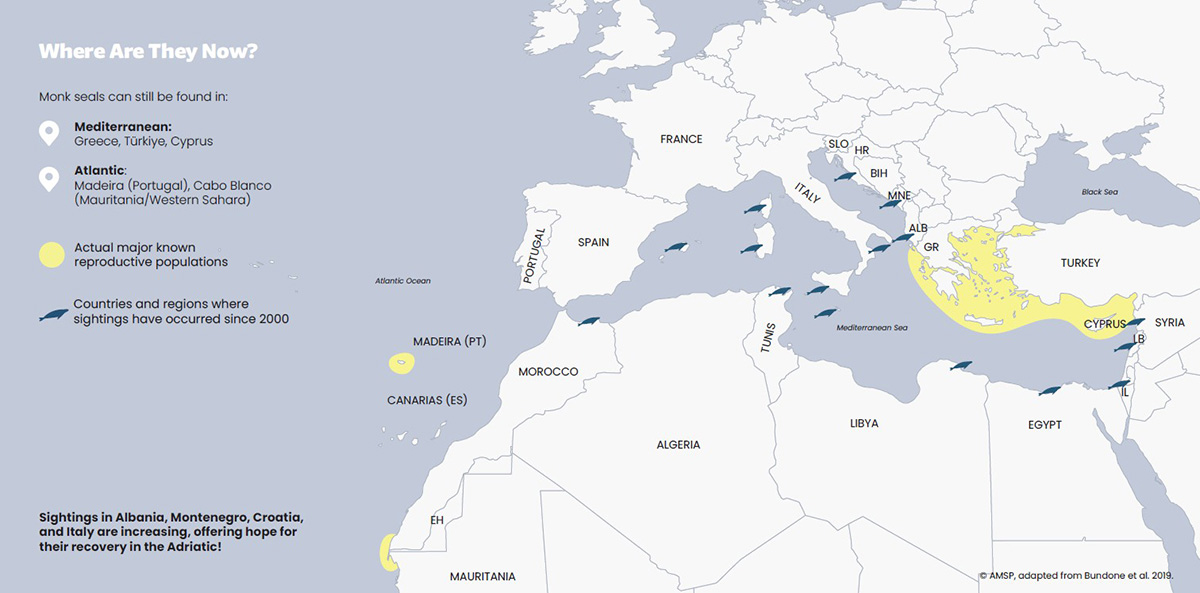
The historical distribution range of the Mediterranean monk seal extended along the coasts of the Black Sea, throughout the entire Mediterranean basin, and into the Atlantic Ocean, included the archipelagos of Madeira, the Azores, and Cape Verde, part of the Iberian coast, and the northwestern coast of Africa from Morocco south to Senegal and The Gambia. Over time, the species experienced a severe decline in both population size and geographic range.
The species was already heavily reduced during Roman times, when it was exploited for its meat, skin, and oil. On occasion, monk seals were even used to entertain crowds in Roman arenas.
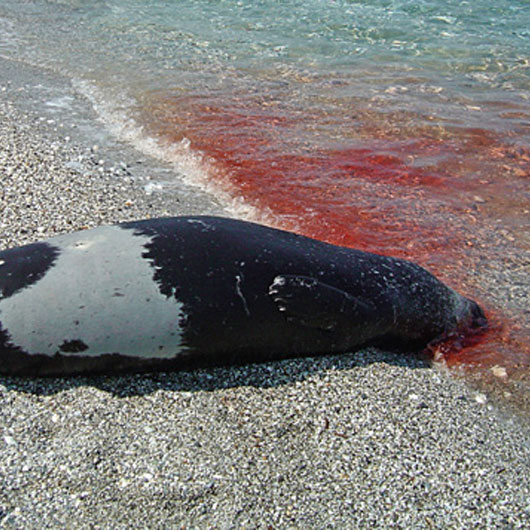
In the centuries that followed, the species continued to suffer a dramatic decline due to persistent hunting and capture, as well as its use in zoos and its killing for taxidermy and exhibition in museums. This intensive pressure drove the species to extinction in the Black Sea and across much of the northwestern and southern Mediterranean basin.
Today, an estimated 1.000 individuals survive, with the remaining reproductive populations found in the Mediterranean along the coasts of Greece, Cyprus, and Türkiye, and in the Atlantic at the Madeira–Desertas Islands and Cabo Blanco (Mauritania/Western Sahara).
However, sightings of individual monk seals have been increasingly reported across several areas of the species’ former range, at least over the past decades, particularly along the Adriatic coast.